

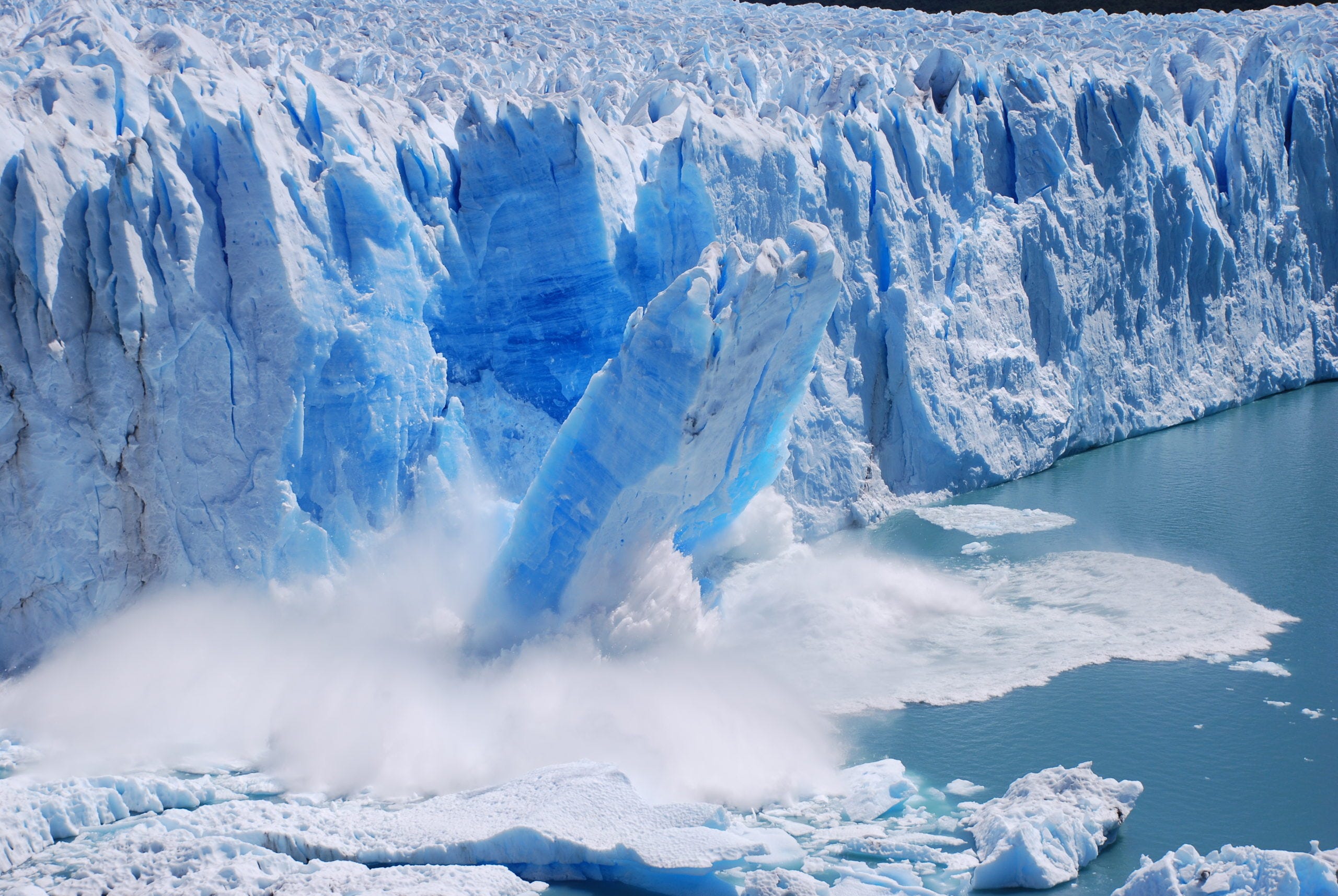
If you’re serious about climate science, the thing that keeps you up at night is the tipping points. We know we’re now flirting with irreversible state-changes in the atmosphere that could yield sharply different climate patterns. The “what” is relatively clear here. The “when” is a lot murkier.
Before we go any farther, I want to be explicit, because there’s always some jerk in comments to get this wrong: the point here is not that “we don’t know anything about climate change.” We know a lot. On some things, we even have certainty. When it comes to extreme heat, for example, it’s “virtually certain” — >99% likely — that hot extremes, including heat waves, have become more frequent and more intense across most land regions since the 1950s, and IPCC attributes this with high confidence mainly to human-caused warming (IPCC AR6 WG1, Ch. 11).The IPCC can say that because different teams using different methods have consistently converged on a similar answer.
That kind of convergence is thin on the ground in the discussion about tipping points, and thinner still when it comes to tipping point timing.
A tipping point is a threshold. Push a system past it and it flips to a different state. The theme here is irreversibility: once you’re past the tipping point, it’s too late to go back. Nudge a chair past its balance point and it crashes to the floor. Standing the chair back up — assuming it hasn’t shattered on impact — will take far more resources than keeping it upright in the first place.
The tricky bit is that the crossing of the threshold and the actual harm often work on completely different clocks.
Scientists call the first the commitment (the moment you’ve crossed the line) and the second the realization (when the pain hits).
For a tipping chair, the lag from commitment to realization is counted in milliseconds; for an ice sheet, it could be a thousand years.
When a screaming headline or a grim tweet gives you a single date for a tipping point, it’s almost always collapsing these two very different things into one date. That impoverishes the debate, because it’s the time lag between commitment and realization that makes tipping points such a hairy problem.
Different tipping points are different. So much so that lumping them together as “tipping points” is itself a little misleading. Still, I want to look at the two most often talked about — the loss of the West Antarctic Ice Sheet, and the collapse of the Atlantic Meridional Overturning Circulation, not because they’re necessarily the most damaging, but because they’re the most intensively researched and best understood. My goal is to try to get some handle on the “when” question. I think if more of us had a clear grasp on how uncertain the answers are, we’d have a more nuanced climate debate.
1: The Doom of the West Antarctic Ice Sheet
There’s a mass of ice in Antarctica sitting on bedrock that mostly lies below sea level, on a bed that slopes downward as you go inland. Once the ocean gets under the edge and the grounding line (where ice lifts off its bed and starts to float) begins retreating downhill, it can keep retreating on its own — a runaway called marine ice-sheet instability. West Antarctica holds enough ice to raise global sea level by roughly 3 to 5 meters.
That’s the headline, but as always in Earth System science, when you zoom in you discover an unholy mess of conflicting claims, theories and observations. There are, in fact, two proposed ice sheet collapse mechanisms, and they give rise to very different forecasts on quite different timelines.
The tamer one is the marine ice-sheet instability just described. The more explosive one is marine ice-cliff instability: the idea that once you expose a tall enough ice cliff at the ocean’s edge, the cliff simply can’t hold its own weight and collapses, exposing a new cliff behind it, which collapses in turn, in a chain reaction that ends with you underwater.
In 2016, DeConto and Pollard built ice-cliff collapse into a model and got an alarming result: Antarctica alone could add more than 1 meter of sea-level rise by 2100 (DeConto & Pollard 2016, Nature). Yes, this is a number derived from the old, mostly debunked RCP8.5 scenario, but given that climate sensitivity seems to be higher than most researchers thought, that in itself doesn’t mean it’s invalid.
Then in 2019, Edwards and colleagues re-examined the question. Rebuilding the analysis with the mechanism included but properly calibrated, they got a most-likely Antarctic contribution of about 45 centimeters by 2100—less than half of the previous estimate. When leaving the mechanism out entirely, the most-likely contribution dropped to just 15 centimeters (Edwards et al. 2019, Nature).
So West Antarctica’s contribution to sea level this century runs from six inches to over three feet, and which number you believe depends largely on whether you think ice cliffs shatter — a question the field has not settled.
But when is the commitment point? Here the news is bad. Some of the field thinks parts of West Antarctica are already past the point of no return. The Amundsen Sea sector — the Thwaites and Pine Island glaciers, the ones you may have seen called the “Doomsday Glacier” — sits at the low end of every threshold estimate. A 2025 modeling study spanning the last 800,000 years found that collapse can be triggered by ocean warming of just 0 to 0.25 °C above today’s temperatures — that is, at or essentially at current conditions (Chandler et al. 2025, Communications Earth & Environment).
Kaitlin Naughten of the British Antarctic Survey, lead author of a 2023 study on Amundsen Sea ice-shelf melt, put it bluntly: “It looks like we’ve lost control of melting of the West Antarctic Ice Sheet. If we wanted to preserve it in its historical state, we would have needed action on climate change decades ago.”
Her study found that faster ocean-driven melting this century is now essentially committed regardless of emissions — there was no meaningful difference between a middle-of-the-road scenario and the most ambitious Paris target (Naughten et al. 2023, Nature Climate Change).
But Naughten was talking about melting on this century’s timescale — not the multi-meter sea-level disaster movie outcome, which is a much slower and separate story.
Because for sea-level rise itself, the timeline is distressingly wobbly.
DeConto and Pollard’s 2016 model, with the ice-cliff mechanism switched on, gave more than a meter by 2100 and more than 15 meters by 2500 under RCP8.5. Edwards and co., with the same mechanism switched off, cut the 2100 figure to about 45 centimeters. The 2019 expert elicitation led by Bamber put the median contribution to sea levels from both ice sheets (Antarctica and Greenland) combined at roughly 26 centimeters by 2100 in a 2 °C world, with about a one-in-twenty chance (at the 95th percentile) of exceeding 2 meters of total sea-level rise under high emissions.
A 16-model ensemble published by Seroussi in 2024 projected that Antarctica’s contribution to sea-level rise would remain under 30 centimeters by 2100, but would then accelerate violently, spiking to as much as 4.4 meters by the year 2300. Golledge’s 2015 modeling gave a similar shape: a mere 0.01 to 0.38 meters by 2100, but 0.2 meters to more than 5 meters by 2500. And Joughin’s 2014 study of Thwaites concluded that a collapse of that one basin was “likely within the next 200 to 1,000 years.”
So for the year 2100, the estimates span from a few centimeters to more than a meter — a more-than-tenfold spread. For the ultimate multi-meter rise, the estimates span from the next couple of centuries to the next several millennia. The basic story — a near-term trigger with a slow, centuries-long climb to ultimate horridness — is more or less agreed on. On the actual dates, the field is all over the map.
2: AMOC Amuck
The Atlantic Meridional Overturning Circulation — the system of ocean currents that carries warm surface water north (the Gulf Stream is one part of it) and cold water back south at depth. It’s a big reason Bordeaux does not have the winters Montreal has, even though they sit at pretty much the same latitude. Freshen the North Atlantic with enough meltwater and the supply of warmth to Europe can weaken and, in principle, just stop.
When it comes to conflating the commitment date and the realization, AMOC coverage is systematically among the worst offenders. But the tipping point is one event, the circulation actually winding down is another, and the cold-winters, failing-farms, rising-seas impacts are a third. The public argument has been almost entirely about the first of these events. Science has not yet pinned down any of the three.
In 2023, Peter and Susanne Ditlevsen fit a statistical model to a century and a half of ocean-temperature data, extrapolated the loss of stability, and produced an actual calendar year. Their headline number: A central collapse estimate of 2057, with a 95% confidence range of 2025 to 2095 (Ditlevsen & Ditlevsen 2023, Nature Communications).
That’s a shockingly near-term, shockingly specific claim — the threshold possibly crossed within a decade or two, most likely mid-century. It got enormous attention. But read it precisely: it is a commitment date, not an impact date. Even if the Ditlevsens are exactly right, 2057 is the year the system is doomed, not the year Europe freezes.
Backing up the “sooner than we thought” direction, van Westen and colleagues in 2024 produced the first simulation of an AMOC tipping point in a full-complexity climate model and concluded the real-world AMOC is “en route to tipping” (van Westen et al. 2024, Science Advances). And Stefan Rahmstorf of the Potsdam Institute, reacting to the Ditlevsen paper, wrote, “the scientific evidence now is that we can’t even rule out crossing a tipping point already in the next decade or two.”
Does everyone agree? Of course not.
Baker and colleagues analyzed 34 climate models under extreme greenhouse-gas and meltwater forcing and identified a stabilizing mechanism (winds pulling water up in the Southern Ocean) that the more alarming studies leave out. Their conclusion: a full collapse this century is unlikely — AMOC weakens a lot, but doesn’t shut down (Baker et al. 2025, Nature). Bonan and colleagues, using observations to constrain the models, found only “limited” weakening of about 18–43% by 2100, and no collapse. And the IPCC’s assessed position is “medium confidence that the AMOC will not abruptly collapse before 2100” (IPCC AR6 WG1).
So on question one alone — the commitment date — the field spans from “possibly within a decade or two” to “not this century.”
But suppose the threshold is crossed. The collapse doesn’t happen the next morning; it plays out over some stretch of years, and only then do the impacts fully land. And this second lag is a range so wide it makes the precision of the debate on commitment date look faintly ridiculous.
The big tipping-point synthesis puts the collapse timescale at a central estimate of about 50 years, with a range of 15 to 300 years (Armstrong McKay et al. 2022, Science).
Van Westen’s simulation had the collapse, once begun, completing in under 100 years — “a slow decline can lead to a sudden collapse,” in their phrase — with parts of northwest Europe then cooling by more than 3 °C per decade, a rate of change with no modern precedent (van Westen et al. 2024). This is proper disaster movie stuff, and yes, it’s entirely within the realm of possibility.
But the most vivid impact figures you may have seen (London winters hitting −19 °C, Edinburgh −30 °C, up to a meter of North Atlantic sea-level rise) come from a follow-up that explicitly describes a far-future equilibrium state, not the coming decades (van Westen & Baatsen 2025, GRL). How far-future is far-future? The researchers never say, just “several hundred years from now.”
This refusing-to-hazard-a-guess thing is instructive. On the timing question, some of the most careful researchers concede the uncertainty is so wide, they refuse to play the calendar game. Niklas Boers, whose 2021 study is one of the foundational AMOC early-warning papers, deliberately gave no date, saying plainly “the AMOC’s stability has declined. It has moved closer towards a possible tipping point. But we cannot say when that might happen.”
And as René van Westen, lead author of the “on tipping course” study that alarmed everyone, puts it, “we are never going to get a [fully] reliable ‘early warning’ because the uncertainties around the data availability are just too large.”
Then there’s one study that hasn’t made much noise. In 2024, Maya Ben-Yami, Niklas Boers, and colleagues took the same category of method behind the “2057” forecast and stress-tested it: they ran it on different datasets and with different reasonable analytical choices to see how stable the predicted tipping date was.
The predicted AMOC tipping times ranged from 2050 to the year 8065.
So, a six-thousand-year window (Ben-Yami et al. 2024, Science Advances; TUM summary). Lead author Ben-Yami says, “our research is both a wake-up call and a cautionary tale. There are things we still can’t predict... The stakes are too high to rely on shaky predictions.”
When your method can put the answer anywhere between the lifetime of a person born today and the fall of a civilization not yet founded, that’s just a polite way of saying “we have no idea.”
Look, this post looks briefly at two hypothesized tipping points. There are lots more in the literature. There are probably still more in nature that we haven’t identified at all. And many of them share the traits that decision theorists describe as giving rise to deep uncertainty.
Deep uncertainty attaches to problem where the experts don’t just disagree about the odds — they can’t even agree on the underlying mechanisms, on what counts as proper data, on the probabilities, or in some cases on which outcomes are on the table in the first place.
Climate tipping-point timing is deeply uncertain. The mechanisms are disputed, and different mechanisms give rise to different timelines. The observations are too short and too indirect — we’ve only measured the AMOC directly since 2004, so the long-term claims lean on proxies that at least some people in the field find iffy. The models disagree with each other. They all have serious blind spots — the simpler models produce collapses the complex ones don’t, and the complex ones are suspected of being systematically too stable.
We are steering a system with long lags, irreversible thresholds, and no (or a very faulty) speedometer. The people who study it most closely keep squirming when we try to pin them down on a date. This happens not because scientists are incompetent, but because they are scrupulously reporting on very sophisticated attempts to forecast insanely complex processes that actively resist being forecast.
Deep uncertainty creates a rich environment for confirmation bias. Whatever your political priors are going into this debate, you can find a study to back them. If you’re a catastrophist and you think AMOC is going to sputter to a halt next year, you can find a study to back that. If you’re a denialist and think AMOC’s good for the next 8000 years, you can find a study to back that. You pays your money and you takes your choice.
No wonder public debate is so unsettled: when the science is in this sort of state, if you “follow the science” you can end up pretty much anywhere.
The question, really, is how we’re supposed to make decisions under uncertainty as deep as all this. I’m increasingly obsessed with this question, because I’ve yet to find anyone able to offer up a really satisfying conclusion.
I’m developing a view about it, which definitely needs some stress-testing, but dwells on the things we would want to do regardless of whether we turn out to be on an apocalyptic path, or merely an annoying one. The category decision theorists lump these sorts of low-regret policy paths under is “robustness”. It will come as no surprise to people who read this substack that I think the most robust way forward leans hard on low-cost carbon dioxide removal, and phytoplankton is the only way to do that — but this post is already too long, so I’ll develop that theme in another post.
I think it’s important to emphasize that regardless of all possible outcomes, humans will adapt, but the natural world as we know it, may not be the same.
Hi Quico, the issue here is how we understand the precautionary principle. With planetary reflectivity having already fallen by more than 2% this century, and the speed of decline appearing to double each decade on Ceres data, restoring albedo should be a sensible precautionary principle to prevent tipping points