

Remember the climate crisis? Bet you don’t. For the average news consumer, climate has fallen dramatically in salience this year.
Which kind of figures: the world is on fire.
A deranged American president launched a war he can’t explain that now threatens a global economic calamity. The global order is no such thing, and AI is racing towards the realm of the truly weird much faster than people guessed even just a year ago. It’s…not an environment that’s conducive to fretting about climate, is it?
Not everybody’s thrown in the towel, of course. The Guardian still has a Climate Crisis vertical, and plenty of outlets do still try to keep up some climate reporting. Yet when the Washington Post fired fourteen climate reporters in February, the story barely registered. Everybody recognized that the vibe had well and truly shifted, and honestly with [gestures broadly] all that going on, worrying about climate feels like a bit of a specialist interest, doesn’t it?
Look, I’m a climate guy. I work on climate, I spend all day every day thinking about this stuff. So you might expect me to be distraught about its disappearance from the discourse. I’m not, though. Because I know the public’s basic response to the shitshow that is 2026 is, strictly speaking, quite rational.
For all the time and effort (and money) spent by the activist community to convince us that climate is an acute emergency, most people understand that the biggest risks associated with climate change are long term. Genuinely catastrophic outcomes are very much in the cards — and very much more likely to upend the lives of your great grandchildren than yours.
People discount the far future; they always will. Discounting the far future is fully rational. Doing so more aggressively when you’re in the middle of an acute crisis is also fully rational. Your high blood pressure may be a genuine, serious health problem, but if you’ve just been shot in the thigh you’d be insane to prioritize it right this minute.
That’s just the way the world works, and if we allow ourselves to think about it dispassionately, I don’t think any of us would seriously dispute that.
As a climate activist, I don’t think these realities are reasons for inaction, much less for despair. I try to accept them as a given: just the shape of the information space we operate in.
We don’t actually get to change it, and if we try —by launching, say, an ill-judged information campaign to convince people to write “climate crisis” instead of “climate change”— all we’ll do is raise the public’s skepticism. People know when they’re being hoodwinked.
The willingness to take a cold, hard look at these realities has come to be associated with the denialist right: people like Chris Wright who want to make it an excuse to do nothing. That’s not a defensible position either, I don’t think. Intuition screams at us that leaving an unlivable planet to the people of the 22nd century is wrong, even if you and I won’t be there to deal with the consequences
Instead, I try to think honestly about what we can do about a hugely consequential problem that most people quite rationally do not prioritize.
That people will not and should not prioritize climate has troubling consequences. For one, it means we’re not likely to see dramatic reductions in greenhouse gas emissions anytime soon. Yes, emissions may peak in the next ten years or so and start to abate slowly, but that’s very different from the kind of drastic, fast reductions needed to reach net zero quickly enough to keep warming to within 2 degrees of the pre-industrial baseline.
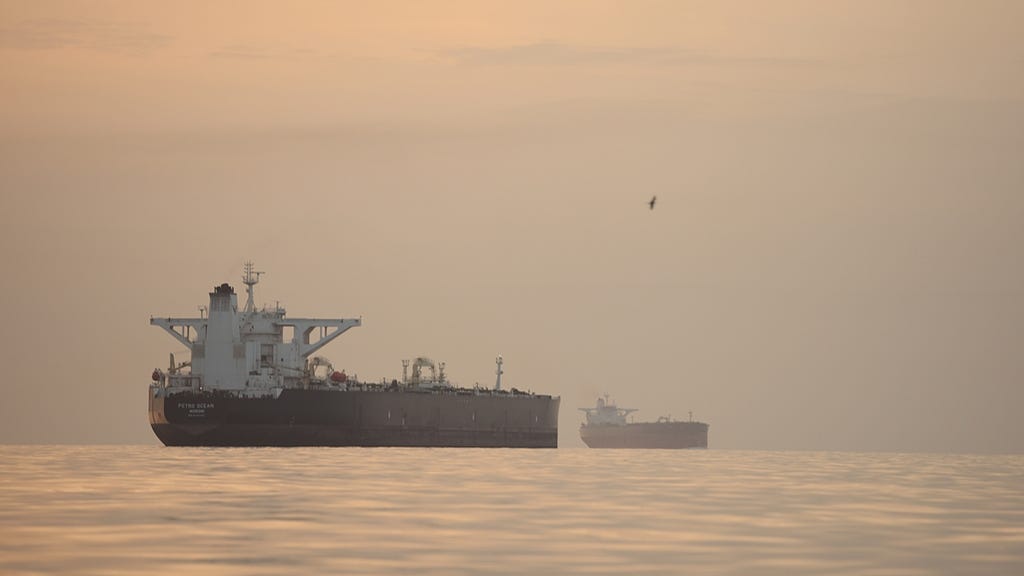
Such abrupt reductions would be just about imaginable if people really did see climate as a crisis in the same way they see the Strait of Hormuz crisis as a crisis. But they don’t, and they won’t, because it isn’t.
People will not support a drastic changes in their lifestyles, much less dramatic reduction in their standard of living, to prevent big harms in 80 years. Thinking we can persuade them to do that is a fool’s errand. It would be irrational and self-harming and they won’t do it, and the sooner we accept that, the sooner we can move into an honest conversation about what we can do.
This is why I spend all my time working on heterodox responses to climate change.
Albedo modification and marine Climate Dioxide Removal are the only responses to the climate crisis that align the public’s actual level of concern with a program of action we can really implement.
These heterodox responses allow us to meet people where they are — to tell them, honestly — “look, I get it: this is a concern for you, but it’s not the concern. You’re not going to turn your life upside down to respond to it, nor should you. Still, it’s madness to just ignore it, so let’s have an honest conversation about the things we can do without nuking your lifestyle, or your budget.”
Traditional environmentalists will see that as waving a white flag. It’s certainly not that. It’s a grown-up response to a problem that’s proven to be beyond the reach of juvenile antics.
Honestly I'm relatively glad: when a theme leaves the mainstream debate, that's the time adults can enter the room at last and do the work. It's just the physiological cycle
The only plausible response to climate change is massive technological intervention to adjust the planet’s climate and increase the amount of resources available to us. Anything else is wearing a raincoat in the face of a tsunami.