

Over on Persuasion, I’m running a piece aiming to hit one theme hard: it’s not just that the globe is warming, it’s that the rate of warming is accelerating.
I think readers here probably have a higher tolerance for Earth System nerdistry than over on the Persuasion side, so I want to take a moment to reflect on what acceleration trend really means.
To scientists, accelerating temperature rise is alarming not just, or even mainly, because heating the planet is bad. It’s alarming because the Earth System Models that climate policy is built around mostly didn’t foresee it. Which suggests the models, on the whole, have been far too sanguine about our prospects.
For all the alarmism out there, it may be that the conversation we’ve been having is built on rose-tinted glasses.
Let’s back up.
Everybody knows that greenhouse gases trap heat in the atmosphere. Coming at this as an outsider, I just assumed that scientists knew how much heating, exactly, we’ll get from a given level of greenhouse gas in the atmosphere.
So it came as a bit of a shock to realize that they don’t.
At all.
In the jargon, this is the “climate sensitivity” (CS) question.
CS is defined as the global average surface warming, once the climate has fully settled to a new equilibrium, that results from a doubling of atmospheric CO2 relative to pre-industrial levels. This whole thing is at the center of a huge, multi-decade scientific controversy
Different climate models yield very different estimates of climate sensitivity. They range from about 1.8°C at the low end, in Russia’s INM-CM4-8 model, all the way up to about 5.6°C, in Canada’s CanESM5 model. (Earth to CMIP: get a marketing consultant to think up better names for these models!!)
Since scientists haven’t been able to agree on what the right number is, the IPCC —the UN’s climate science panel— has been forced to split the difference, following a convoluted process to yield a “consensus” estimate of 3°C (likely range 2.5–4°C) that actually sits below the average of the models, because it under-weights the ones that run hot.
But this is a hugely problematic way of dealing with the problem. If seven experts disagree violently with one another, you don’t “generate” consensus by splitting the difference between seven incompatible estimates. All that does is paper over the cracks, and project a misleading impression of consensus where no consensus exists.
And this is where the recent acceleration in the warming trend really makes a difference, because reality is finally stepping in to arbitrate between the models. And it’s telling us pretty damn loud and pretty damn clear that the models that “run hot”, the ones with higher estimates for climate sensitivity, are probably right.
(Only “probably” because there’s always a possibility that they’re coming to the right result on the basis of the wrong atmospheric physics just by chance.)
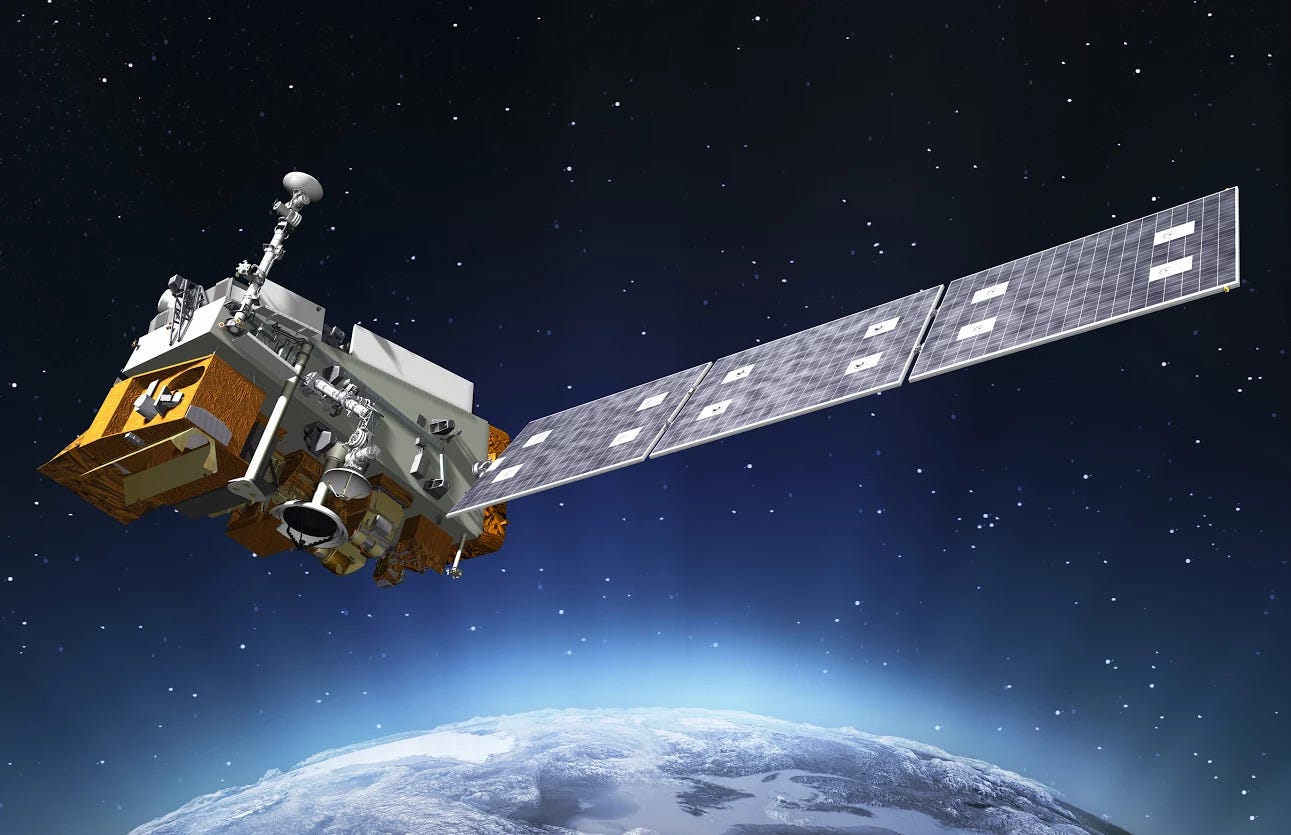
In fact, even models that run hot failed to fully foresee the recent upward trend in Earth’s energy imbalance (EEI) measured by NASA’s CERES satellites. To match the recent observations, a model seems to need a climate sensitivity somewhere in the 3–5°C range.
It’s important to understand why some models came closer to the mark than others. The less-wrong models produced larger gains in absorbed sunlight from the loss of snow, sea ice and low cloud, than the cooler, more optimistic models. They had swingier albedo, and albedo has been swinging quite a lot.
But, in fact, all the models underestimate how strongly losing low clouds amplifies warming: one satellite-based analysis puts the observed feedback at about double the model average.
IPCC has known all along that the area where the models really disagree is on how they handle earth reflectivity (albedo), especially aerosols and clouds. Reality is now arbitrating this dispute, and it’s telling us that reality may be more pessimistic than the most pessimistic models.
It’s going to be really interesting to see how the modelling community adapts to this as it gears up to the next round of IPCC Assessment, AR7. Some academics appear to be dug in to their low CS estimates, have built reputations and careers around them, and will be tempted to defend them. They may even be right! The science is complicated, and what we have so far is quite a lot of circumstantial evidence that the high CS-estimate models are capturing something real the low CS-estimate models are missing. It’s not outright proof.
If AR7 comes out with a substantially higher consensus estimate for climate sensitivity than previous rounds, that’ll really set the cat among the pigeons on the policy side. A sharply higher consensus range for CS would make it impossible to continue to ignore earth reflectivity going forward, and may push earth system stabilization onto the center of the agenda. That hasn’t happened yet, and the next Assessment Cycle won’t be concluded until late 2029, when the Synthesis Report is due. The physical-science report, where climate sensitivity gets assessed, is expected in 2028.
It’s all still to play for, but the climate space is going to get a lot more interesting as more and more new data fact check the old models.
The real danger is that acceleration itself is accelerating. That is the trend that best fits the data. Neglect of albedo loss is the primary scandal in climate politics.
IPCC reports at the granular scale have consistently emphasized the deep uncertainty in measuring climate sensitivity. The truth is we’ve never been able to model the atmosphere at a small enough scale to address clouds and aerosols. The misleading starts with the IPCC executive summaries and then really into reckless false precision land in the media. Now we are paying the price for environmentalist irresponsibility. I used to be one at NRDC where I was a Senior Attorney.
To my knowledge, there is no massive qualitative improvement in modeling capacity on the horizon so humanity will continue to operate pretty much in the dark on what the future holds.
And people are experiencing deep credibility fatigue as a result. Policy responses at a sufficiently large scale are now less likely than ever. Ironically just as we are receiving evidence that the problem could be far worse.
The boy who cried wolf writ large. We’re just going to have to hang on tight as we steer the ship blindfolded.