

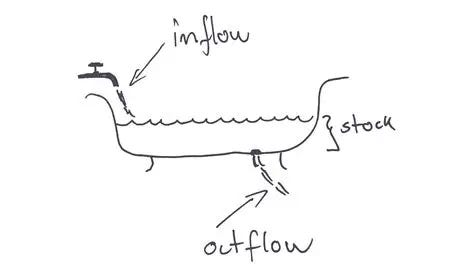
There are two ways to stop a bathtub from overflowing: you can stop water from flowing in, or you can allow water to flow out. If your priority is to stop the bathtub from overflowing, the two are equivalent.
The same is true for carbon dioxide in the atmosphere.
For three decades, climate debates have focused on slowing the rate at which we add carbon dioxide to the atmosphere. That approach has mostly failed.
The rate at which we emit carbon dioxide to the atmosphere is still accelerating. In the next 10 years, that rate is expected to start slowing, but not quickly enough to keep global temperatures within internationally agreed targets.
The narrow focus on slowing emissions has tended to obscure the alternative. We can also remove carbon dioxide from the atmosphere. Right now, we don’t have technologies able to do this at the sort of scale that will matter for the climate. Most of the methods people are looking at are either too expensive, too short-lived, or both.
For Carbon Dioxide Removal to make a difference, it needs to be both low-cost and long-lasting. It also needs to be safe for people and the environment.
Only one approach has a realistic shot at meeting all three criteria: marine Carbon Dioxide Removal (or mCDR).
Oceans already soak up about a quarter of all the carbon we put into the air. They hold about 50 times more carbon than the atmosphere does. If we could gently nudge the oceans so they’ll absorb carbon dioxide a bit more quickly, we could solve much or all of the climate problem without bankrupting the world economy.
There are two broad ways of doing coaxing the ocean into absorbing more carbon dioxide: the first involves chemistry, the second biology. I work on biological approaches. The idea is to increase the ocean’s capacity to sustain microscopic marine plants —phytoplankton— that naturally absorb carbon dioxide. I think phytoplankton approaches will win the carbon dioxide removal race because they offer a unique combination of low cost, ecological safety, and scalability.
We’re not there yet. We need a lot more science to learn how to enable phytoplankton growth safely, at scale. My day job is to support the people who are doing that research right now.
mCDR isn’t magical. It works on sound scientific principles that have been around for decades. You don’t hear much about it, because the global climate conversation is stuck in an outdated way of thinking about the problem. And yet it’s the best —and the only realistic— solution to the climate problem. So you’ll be hearing a lot more about it over coming years.
I would not rule out air capture of CO2. I’ve written a lot about it over the years and while it remains much too expensive, I would think it’s going to be more acceptable to the public that marine capture. Most likely we will need both because, as you note, mitigation isn’t going well. I’d love to read more about your work.
The big issue is that NFix is not proven yet, while emissions reduction is.
Of course, I see your point: this MAY be the solution we need, it’s crazy we aren’t pouring a lot of resources into exploring it! I agree.
On the other hand, saying “emissions reduction failed, this is the only way forward” is overplaying it. If we’re in a world where NFix doesn’t scale, we’re stuck with old emissions reduction as our only path.