

Before the Industrial Revolution, there were about 2 trillion tons of carbon dioxide in the atmosphere. Since then, we’ve added about 1.1 trillion tons more. Each year, people add about 40 billion tons more, but about half gets absorbed by the ocean or by land, so on net we’re adding about 20 billion tons to the atmosphere each year — and that figure is still rising, year-on-year.
Having a basic handle on these sorts of order-of-magnitude questions really should be table-stakes in climate world. And doubly so if you’re in carbon dioxide removal. Alas, it isn’t. Instead, a shocking proportion of climate discourse happens in a weird order-of-magnitude vacuum.
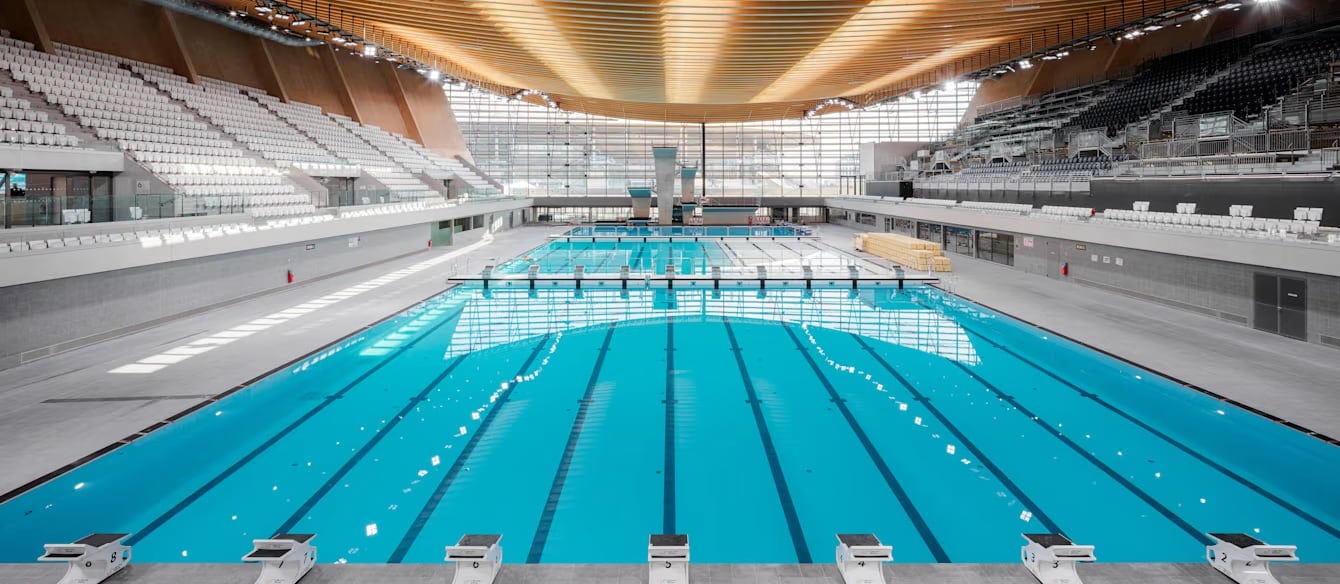
It’s as though we had civilizational imperative to empty out an Olympic-sized swimming pool and thousands of people were working in an emerging Swimming Pool Water Removal industry but, when they talked about how to do it, everyone studiously avoided mentioning if they were going to be using an eye-drop, a table spoon, a garden bucket, or an oil drum. Of course, the cost-per-unit-of-water removed you get from these different methods is going to be very, very different. But nobody talks about that either.
Partly, I think, this happens because editors despair about readers’ ability to make sense of large numbers — kiloton, megaton and gigaton are all treated as just rough synonyms for “a lot.” But mostly, I fear, it’s because many methods pitched as carbon dioxide removal “solutions” operate at climate-irrelevant scales, and it’s not in anyone’s interest to call attention to that fact.
Naturally, the people peddling the eye-drop as a Swimming Pool Water Removal pathway would prefer that you not grasp that their method operates at irrelevant scale. Naturally, they don’t want to call attention to the fact that trying to drain the entire pool with the thing they’re building would cost an insane amount of money even if it was possible, which it probably isn’t.
The rest of us, though, don’t share their interest in obfuscation. Yet CDR stories seldom address the total tonnage of carbon dioxide a given pathway could reasonably one day be expected to remove, and almost never dwell on what they would cost.
Once a week Andrew Lockley’s Carbon Dioxide Updates substack rounds up everything published about CDR and consolidates it into a digest.
It’s a useful service, and a fun target for analysis. I used Claude to vibe-code a little script to scrape all the stories in 17 recent installments of Andrew’s newsletter, and set the robot to work scouring them for talk of scale and costs.
The findings are about what I’d expected — which is to say, dismal. I had the robot throw out everything about CDR in general (policy, markets, commentary, accelerators) and keep only items about some specific method: a company, a project, a paper, a podcast. That left 785 items. Of those, 603 — more than three in four — said nothing at all about how many tons were involved or what a ton cost. Nada.
Only 139 of the 785 items, fewer than one in five, put an actual figure on tonnage. Another 11 gestured at scale without a figure, and at least four of those leaned on the word “gigaton-scale”.
The numbers that did appear are almost all of the same kind: a contract signed, a batch of credits issued, or —the last refuge of a scoundrel— a projection. Almost none of them are set against the size of the problem. Out of 785 items, exactly two put a number on how big the problem is: a video about the 1.7 trillion tons of legacy CO₂, and a Climeworks interview that mentioned in passing the roughly 40 billion tons we emit each year.
But the silence on tonnage is not the worst of it, that distinction goes to cost. Just thirty of 785 items, under 4%, stated a cost per ton. Another 22 talked about costs in the abstract (“drive down costs,” that sort of thing). In the news sections it’s worse: five numeric cost mentions out of 415 items. The only place cost shows up with any regularity is academic papers, 22 of 237, or about 9% — but then, who really reads academic papers?
The two things you need to know whether a story matters are cost and tonnage together. Just ten stories gave both. And two of those ten concerned a single tonne. A biochar firm called Restord agreed to deliver one tonne at £200. And Noah Deich bought one tonne of DAC removal in Kenya for $735, paid for with his Substack earnings.
I say this with love: that’s not a climate solution, that’s a gesture.
Some headlines gave both a dollar figure and a tonnage but left the division to the reader. Frontier’s deal with Arbor: $41M for 116,000 tons, about $353 a ton. Frontier and 44.01: $11.7M for 20,932 tons, about $559 a ton. Climeworks’ contract with the University of Reading: £783,749 for 5,165 tons, about £152 a ton. None of those per-ton prices appeared in the text. When the cost does get stated, the spread is its own commentary. One paper put levelized DAC costs anywhere from $101 to $8,579 a ton. Terraform said it had demonstrated DAC under $200. Another paper concluded DAC offtake prices would need to exceed $2,500 a ton to be bankable.
Let’s put those tonnages back into swimming pool terms. Say the pool is the 20 billion tons we add to the atmosphere each year. An Olympic pool holds about 2.5 million liters, so one ton works out to about a tenth of a milliliter, two or three drops from the eye-dropper. The median tonnage figure quoted across the whole sheet was 60,000 tons, which gets you roughly a bucket. The biggest engineered-removal deal in the dataset, Microsoft’s 2.95 million tons from Gaia in Denmark, spread over the whole of the multi-year contract, gets you about a bathtub. Add up every deduplicated offtake and delivery in the sheet for methods that count as durable removal (biochar, BECCS, DAC, ERW, OAE, biomass burial and the rest), and it comes to about 5.3 million tons, a couple of bathtubs, accumulated across contracts that run into the 2030s.
People in the field get pretty tetchy when I criticize it this way. “Every method has to start somewhere,” they’ll say, “a first tonne has to come before a millionth.” Except many of the methods under discussion have fundamentally high cost floors or irreduceably low tonnage ceilings: unless energy becomes free, DAC is never going to cost less than a hundred dollars a ton. There isn’t enough land on earth for BECCS to reach climate-relevant scale. That being the case, the refusal to face the question “how big, and at what price?” begins to look like obfuscation. These questions aren’t asked because answering them would make the pointlessness of the exercise inconveniently plain.
Look, I work in CDR, but I have a serious problem with the discursive standards that have taken hold in this field. Far too much of what’s in Andrew’s newsletters amounts to someone developing something small and describing it with adjectives that belong to something big. It’s just sketchy.
But the real reason to be mad at the state of CDR communications is that the constant obfuscations about scale ends up misdirecting desperately scarce resources. Companies that built an eye-drop-sized prototype and are want to grow it to table-spoon scale end up absorbing capital that might have gone to groups that have a bathtub and are trying to take it to backyard pool scale.
In the order-of-magnitude-less, context-less blob of CDR communications, it takes a superhuman effort not to be bamboozled by slick presentations for methods with zero point zero percent hope of scaling.
Of course, this annoys me in particular because I actually do work on a method that has a clear path to reaching climate relevant scale. The amount of iron it takes to capture a ton of carbon dioxide by growing microscopic ocean plants is measured in cents, not dollars. Phytoplankton carbon start with an orders-of-magnitude head starts in terms of cost, and a clear path to billion-ton-per-year removals. If the goal of CDR is to do something about atmospheric carbon concentrations, you’d think we’d maybe concentrate or energies on that, instead of pouring millions into engineered approaches that only reach gigaton scale if we suspend the laws of thermodynamics.
Except, doing something about atmospheric carbon concentrations is manifestly not what the CDR industry is mostly about. The sector seems much more interested in doing something about the returns investors in CDR startups can expect. And if obfuscating the scales involved is what it takes to deliver on that, pretty much everybody seems to be cool with that.
Not me.
Am surprised to not see the Great Biochar Co. not promoted for start up seed money. They offer to make the most effective biochar out of fossil fuel lobbyists and climate deniars.